
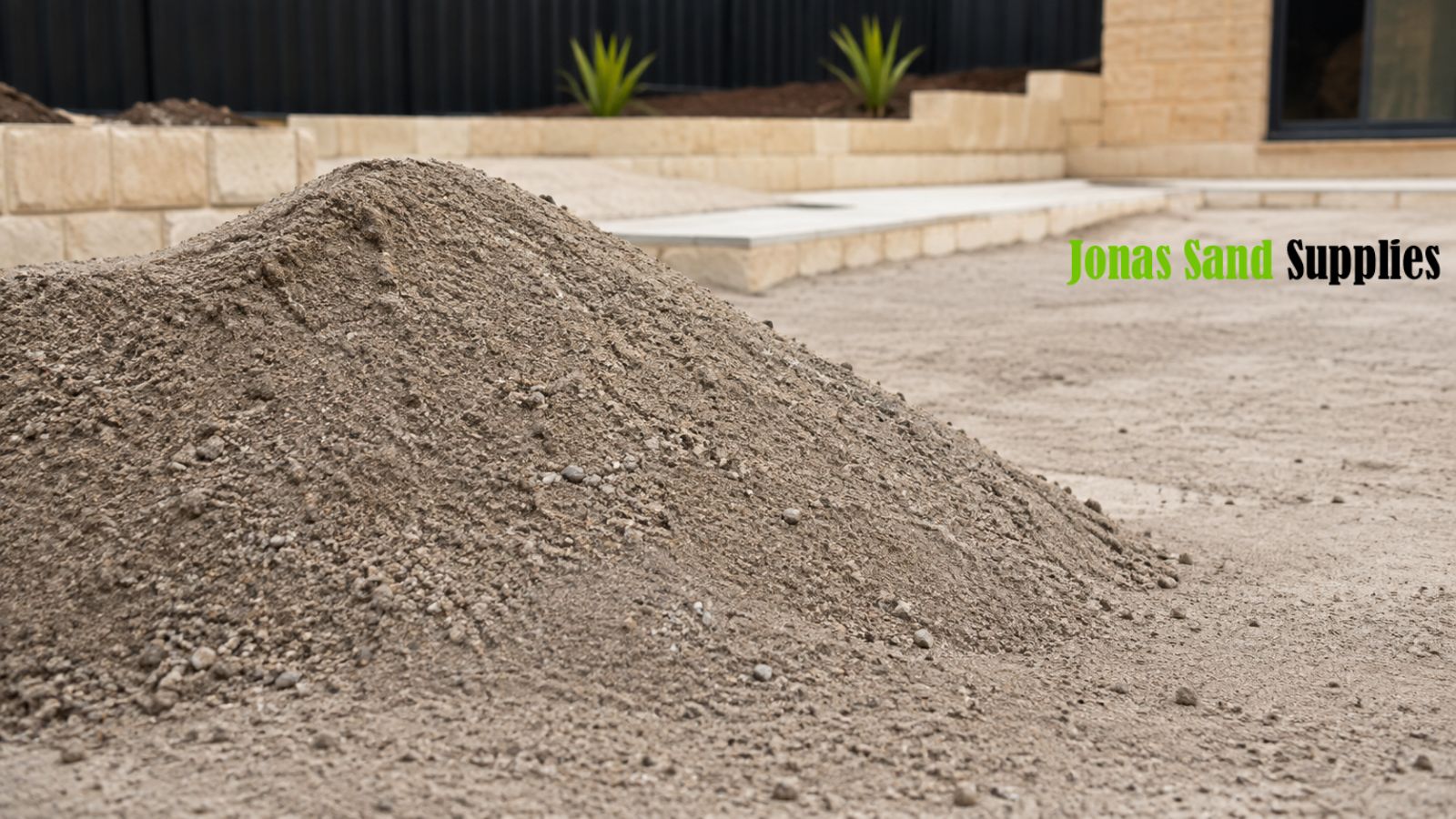
Choosing the right bulk material can make a surprisingly big difference to a landscaping or construction project. A pathway that shifts after heavy rain, pavers that become uneven, or a driveway that develops ruts often has less to do with the visible surface and more to do with what was placed underneath it.
That is where Cracker dust in Perth can be useful.
Cracker dust is a finely crushed aggregate commonly used for landscaping, paving preparation, pathways, levelling, and other applications where a compactable material is required. Its fine texture allows it to fill small voids and form a firm layer when correctly placed and compacted.
However, cracker dust is not a universal substitute for sand, gravel, road base, or other aggregates. The best material depends on the application, ground conditions, drainage requirements, traffic, and the finished surface you want to create.
For Perth homeowners and contractors, understanding these differences before ordering material can save time, reduce waste, and help avoid expensive remedial work.
At Jonas Sand Supplies, the practical approach is simple: identify what the material needs to do, assess the conditions it will be placed into, and then select an aggregate that suits the job.
Cracker dust Perth is perfect for a range of applications when its characteristics match the project. The key is knowing where it works well—and where another material is the better choice.
Cracker dust is a finely crushed aggregate produced during the processing of suitable rock, commonly limestone. It consists predominantly of very small particles and stone fines rather than the larger pieces found in conventional gravel.
Its fine consistency gives it several useful characteristics:
The exact composition and grading can vary between products, so it is important to check what you are actually purchasing rather than assuming all cracker dust behaves identically.
The material contains a mixture of very small particles that can settle closely together.
When spread and compacted under suitable conditions, the particles become densely packed. Mechanical compaction helps remove excess voids and creates a more stable layer.
This is one reason cracker dust is commonly considered for paving preparation, paths, and other landscaping projects.
But there is an important distinction: compacting well is not the same as being structurally suitable for every application.
If the ground underneath is soft, wet, poorly prepared, or prone to movement, a compacted top layer will not necessarily solve the underlying problem.
That is why ensuring durability and stability requires attention to the whole construction profile.
One of the most common mistakes in landscaping is choosing a material based solely on appearance.
Several bulk products can look similar when viewed in a pile but perform differently once installed.
Sand is generally more rounded or granular depending on its source and intended use, whereas cracker dust consists of crushed rock fines.
Different sands are manufactured or selected for different purposes, including bedding, mortar, drainage-related applications, and filling.
Cracker dust is valued primarily for its compactability and fine crushed-rock structure.
Road base is designed to provide structural support and is generally composed of a graded mixture containing larger aggregate particles and fines.
For a vehicle-access area, road base may be more appropriate as a structural foundation than relying solely on a fine material.
Cracker dust can potentially form part of a broader construction system, but the appropriate design depends on the expected load and site conditions.
Fill products are typically used to raise levels, backfill areas, or build up ground profiles.
Using a fine compactable aggregate where a larger-volume fill product is required may unnecessarily increase project costs.
The most economical approach is often to use each material where its properties provide the greatest benefit.
A driveway is one of the more demanding residential outdoor surfaces because it needs to cope with repeated vehicle loading.
Every time a vehicle enters, brakes, turns, or reverses, pressure is transferred into the surface and underlying layers.
For suitable residential applications, compacted cracker dust can be considered as part of the driveway construction or as a finished surface, depending on the design and expected use.
Definitely not.
A short driveway used by a small passenger vehicle has different requirements from a long access track carrying delivery vehicles, trailers, caravans, or work trucks.
Before choosing cracker dust, consider:
For example, a homeowner creating a low-traffic residential access area on firm, well-drained ground may find compacted aggregate practical.
A property with soft ground and frequent heavy-vehicle movements may require a more substantial engineered pavement structure.
So rather than asking whether cracker dust is “good” or “bad” for driveways, the better question is whether it is appropriate for the specific driveway design.
Preparation is critical.
A successful aggregate driveway typically starts with a stable subgrade. Organic material, loose topsoil, vegetation, and unsuitable soil should be addressed before the aggregate is installed.
The surface then needs appropriate grading and drainage.
After that, the material should be spread evenly and compacted using suitable equipment.
Poor preparation can cause:
These issues are often incorrectly blamed on the aggregate when the underlying cause is inadequate site preparation.
Paving is another application where cracker dust can be useful.
When installing pavers, one of the biggest priorities is creating a stable and accurately levelled foundation. Small irregularities underneath the pavers can eventually become visible at the finished surface.
Cracker dust may be used as a fine levelling or preparation material in suitable paving systems.
A typical installation might involve:
The exact construction method should follow the requirements of the paving system being installed.
Using cracker dust simply because it is fine and easy to spread does not guarantee a successful paving installation. The entire foundation needs to work together.
When planning a landscaping project, it is common to compare Fill sand Perth products with cracker dust.
Although both can be used for filling or levelling in certain circumstances, they are not interchangeable in every application.
Fill sand is generally used where a suitable filling material is needed to build up levels, fill excavated areas, or provide a foundation for subsequent construction.
Cracker dust, by comparison, is a crushed-rock fine aggregate that offers strong compaction characteristics for suitable applications.
Fill sand can be useful when:
Cracker dust can be preferable when:
The correct selection depends on the project specification rather than the material name alone.
Garden paths are one of the simplest ways to make use of compactable fine aggregate.
A cracker dust path can suit informal gardens, native landscaping, side access areas, and pedestrian zones where a hard concrete or fully paved surface is unnecessary.
Imagine a Perth backyard with a landscaped garden running alongside the house. A narrow compacted path could provide access between the front and rear areas without introducing another large concrete surface.
For this type of application, cracker dust can create a practical, understated appearance.
However, edging is worth considering.
Without adequate containment, fine aggregate can gradually migrate into garden beds or onto adjacent lawn areas. Good edge definition makes maintenance easier and helps keep the path looking tidy.
Artificial grass needs a stable foundation if it is going to look good over the long term.
The exact sub-base depends on the turf product and site, but crushed and compactable materials can play a role in preparing an appropriate surface.
Cracker dust may be useful as a fine levelling component in suitable installations.
The important point is not to lay it directly over an existing lawn and expect the finished turf to remain level.
Grass, roots, organic matter, and unstable soil can decompose or move beneath the installation.
A better approach involves:
The artificial turf may look perfect on installation day, but the quality of the foundation determines how it behaves months and years later.
Searching for high-quality cracker dust Perth is only the first step. You also need to determine whether the product is suitable for your particular application.
Consistent particle sizing helps make spreading and compaction more predictable.
Ask what type of rock the product is made from and whether it is intended for your application.
Unwanted organic matter or inconsistent contamination can affect the performance and appearance of the finished work.
Ordering too little can interrupt a project, while excessive material can create unnecessary cost and storage problems.
For larger projects, calculate the area and required depth carefully and discuss the order with your supplier.
A basic volume calculation is:
Length × Width × Depth = Cubic metres
For example, suppose you are preparing a 12-metre-long pathway that is 1 metre wide with a planned 50 mm layer:
12 × 1 × 0.05 = 0.60 m³
This provides a basic volume estimate.
However, material is often supplied loose and then compacted during installation. The final quantity required can therefore differ depending on the application, compaction, wastage, and construction method.
For larger jobs, it is sensible to confirm the calculation with the supplier before ordering.
The quality of the finished surface is strongly influenced by what happens before the aggregate arrives.
Grass, roots, mulch, and decomposing material should not be left beneath a load-bearing surface.
Determine the finished height before placing aggregate.
This is particularly important near buildings, paths, gates, retaining walls, and drainage points.
If certain sections feel soft underfoot or deform under machinery, investigate them before continuing.
Simply covering unstable soil with another layer of material usually hides the problem rather than fixing it.
Water needs a controlled path away from the surface.
Consider slopes, downpipes, surrounding hard surfaces, and natural runoff.
Don’t assume that a very thick layer will compact uniformly. Where the construction requires substantial depth, progressive layering and compaction can produce a more consistent result.
Cracker dust has many applications, but it does not replace every sand or aggregate.
A poor foundation is one of the most common causes of surface failure.
Water can cause problems beneath otherwise well-installed surfaces.
A pedestrian path and a vehicle driveway should not automatically receive the same construction depth.
For many applications, simply spreading the material and walking over it is insufficient.
A rough visual estimate can lead to expensive over-ordering or frustrating shortages.
If you’re considering Cracker dust in Perth, these practical tips can help you get more from the material:
Being helpful also means knowing when not to use a particular product.
Cracker dust may not be ideal when your primary requirement is rapid drainage. Its fine particles can pack closely together, so a coarse open-graded aggregate may perform better where water needs to pass freely.
It may also be unsuitable as the sole structural material for demanding heavy-vehicle applications.
Similarly, if you are filling a deep area, using an expensive fine aggregate throughout the entire depth may not be the most economical solution.
In many projects, the best result comes from using different materials in different layers, with each product performing a specific role.
Cracker dust in Perth can be a highly practical material when its properties match the application. From paving preparation and garden paths to selected driveway and landscaping projects, its fine texture and compactability make it useful across many residential and commercial jobs.
The important lesson is that the aggregate is only one part of the equation.
Proper ground preparation, drainage, layer selection, compaction, quantity planning, and edge restraint all contribute to a successful result. Ensuring durability and stability requires looking at the entire installation rather than expecting one material to solve every problem.
If you’re comparing aggregates for an upcoming project, Cracker dust Perth is perfect when you need the characteristics it is designed to provide—not simply because it is a commonly used product.
Jonas Sand Supplies can help you understand the differences between available bulk materials and make a more informed choice based on what your project actually requires.
Cracker dust is commonly considered for paving preparation, garden paths, landscaping, levelling, artificial turf preparation, and selected driveway or compacted-surface applications.
Its usefulness comes from its fine crushed-rock composition and ability to compact tightly when properly installed.
The correct application depends on the product specification, site conditions, traffic requirements, drainage, and the construction system being used.
It can be suitable for some residential driveways, particularly where traffic is relatively light and the underlying ground can be properly prepared.
However, the driveway needs to be considered as a complete structure. Subgrade strength, drainage, base construction, compaction, surface thickness, and edge restraint all matter.
A driveway exposed to frequent heavy vehicles may require a more substantial pavement design rather than relying solely on cracker dust.
Not automatically.
Although both materials can be used for certain filling and levelling tasks, their physical properties differ. Fill sand is generally selected for applications requiring suitable sand as a fill material, while cracker dust is a crushed-rock fine aggregate known for compactability.
Choose based on the function the material needs to perform, not simply because one product appears cheaper or easier to obtain.
For applications where a firm, stable layer is required, appropriate compaction is generally essential.
Mechanical compaction helps the particles settle and interlock, reducing movement and improving surface consistency.
The correct equipment, moisture conditions, layer thickness, and number of passes depend on the project. A thick layer that is inadequately compacted can remain loose underneath even when the surface looks firm.
Start by explaining the intended application to the supplier.
Provide details such as:
A reputable supplier can then help you understand whether cracker dust is appropriate and what quantity or alternative material may make more sense.

Jonas Sand And Earth-Moving is a professional, reliable and affordable sand supply and earthmoving service. We know what it takes to transform your vision into a reality and we’re committed to being a part of that journey with our esteem clients