
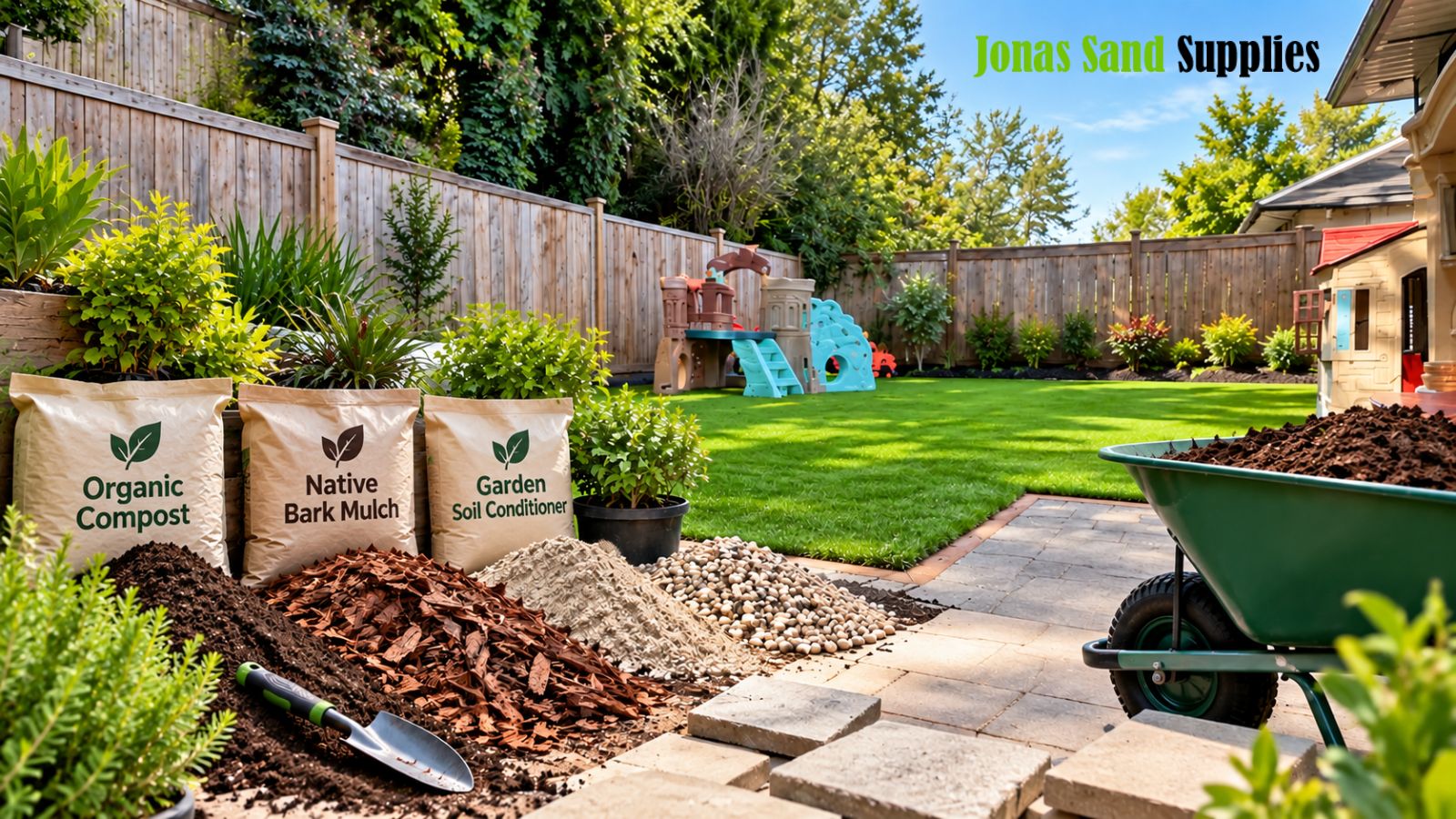
Building a high-yield garden in Western Australia is a challenging task. This is because of the region’s climate and geology. Thus, a local homeowner has to face hot summers. These are typical of the Mediterranean climate and the sandy soil type, which is found in coastal dunes. Landscaping mulch is used widely.
However, a garden that requires minimum maintenance and sustainable land development practices can provide a solution to this challenge. This blog covers the best landscaping supplies in Perth to help create a resilient and eco-friendly garden. We will discuss the eco-friendly landscaping supplies in Perth.
Generally speaking, sustainable landscaping is a group of practices. These help maintain certain biological and physical features in one’s yard. Thus, the key goal of sustainable landscaping is the minimisation of the adverse influence on the local ecosystem. In the case of Perth, Australia, where summer heat is rather common, sustainable gardening usually concentrates on three basic aspects:
| Sustainable Landscaping Pillar | Key Practices |
| Water Conservation | Deep mulching, water-wise design, and drip-line irrigation |
| Resource Recycling | Recycled concrete bases, crushed brick, and compost |
| Soil Enrichment | Clay conditioning, organic carbon, and healthy microbial life |
Mulch is the protective blanket of any West Australian garden. Applying a thick layer of high-quality landscaping mulch is one of the most effective ways to retain soil moisture, suppress weeds, and regulate root temperatures during Perth’s blistering summer months.
Not all mulches perform equally. Fine, dyed wood chips can sometimes draw nitrogen out of the soil or compact down, preventing rainwater from penetrating the ground. Coarser, naturally derived mulches are far superior for local conditions.
| Mulch Type | Best Application | Moisture Retention | Lifespan | Breakdown Benefit |
| Coarse Native Bark | Native Gardens, Flower Beds | High | 18–24 Months | Moderate, long-term carbon release |
| Arborist Chip | Large Garden Zones, Trees | High | 12–18 Months | High, boosts beneficial soil fungi |
| Pea Straw / Lucerne | Veggie Patches, Fruit Trees | Moderate | 3–6 Months | Very High, rapidly releases nitrogen |
| Recycled Wood Chip | Decorative Paths, Borders | Moderate | 12–18 Months | Low-to-Moderate |
Perth’s sandy soils don’t have the proper organic structure. It helps retain moisture and essential nutrients. Without any treatment, fertiliser simply flows through sand into the river system. This causes excessive nutrient pollution of the Swan and Canning Rivers.
In order to create a sustainable base, it is important to amend the soil prior to planting. Eco-friendly landscaping supplies are a great way to offer the best home beautification.
| Amendment Material | Function | Sustainable Benefit |
| Kaolin Clay | Fixes hydrophobia | Permanent soil texture fix |
| Mature Compost | Adds organic matter | Diverts green waste from dumps |
| Biochar | Retains carbon | Holds nutrients like a sponge |
| Worm Castings | Adds beneficial microbes | Natural biological fertiliser |
Sand repels water when dry (hydrophobic). When added to sandy soils, the clay changes the nature of the soil to allow the water to adhere to the soil, as opposed to simply running away from it.
Compost of Green Organic Material: High-quality locally made compost will add valuable humus, thereby adding moisture retention capacity to your garden soils and keeping organic material out of landfill facilities.
Biochar: Biochar is a highly porous charcoal which can hold water and soil bacteria as well as nutrients near the roots of the plants.
There are several types of materials used for landscaping that are very environmentally harmful. Utilising recycled landscaping materials, which are produced locally in Western Australia, decreases your carbon footprint. It also gives you a modern look to the surface.
Recycled Crushed Concrete: This is an environmentally friendly substitute for limestone. You can use crushed concrete as a base for paving, garden pathways, and driveways.
Recycled Crushed Brick: You can use recycled crushed brick to give a warm and rustic look to your garden pathways and other garden features. The material is recycled from local demolitions.
Reclaimed Railway Sleepers: You can recycle rustic wood and use it to make garden edging, vegetable garden beds, and small retaining walls.
| Material | Primary Source | Environmental Impact | Ideal Usage | Durability |
| Recycled Concrete | Demolition Processing | Very Low (diverts waste) | Sub-bases, Paths, Retaining | Extremely High |
| Crushed Brick | Salvaged Masonry | Very Low (reused material) | Pathways, Decorative Cover | High |
| Local Quartz / Granite | WA Quarries | Moderate (local transport) | Feature Rocks, Mulch Top | Permanent |
| Virgin Pavers | Factory Manufacturing | High (industrial footprint) | Formal Paving | High |
Integrating quality landscaping rocks in Perth is one of the most fundamental principles of water-efficient garden design. Rocks contribute structure, contrast, and microclimates to native plants without any need for irrigation.
Selecting rocks that are extracted locally from Western Australia helps keep greenhouse gas emissions low while providing rock types that fit Perth’s natural geological makeup.
Before picking up your landscaping products near me in Perth, run through this practical sustainability checklist:
| Step | Sustainable Project Checklist |
| Step 1 | Test the soil for hydrophobicity and add clay or compost before planting. |
| Step 2 | Choose native West Australian plants that can grow well in poor soils. |
| Step 3 | Use recycled crushed concrete for all sub-base preparation. |
| Step 4 | Add a 75mm to 100mm layer of coarse organic native mulch. |
| Step 5 | Install drip-line irrigation under the mulch layer. |
Going for eco-friendly landscaping supplies in Perth is not a fad. It is a conscious decision to work alongside nature in Perth’s unique natural surroundings. To transform your normal resource-consuming gardens into sustainable ones is nothing short of building an ecological paradise. This requires minimal consumption of tap water, artificial fertilisers, and time-intensive maintenance activities. Native rough mulch application on garden plots and recycled concrete underneath patios further contributes to the ecological habitat.
Using high-quality organic soil conditioners, natural WA stone, and landscaping mulch
makes this challenging aspect of Perth’s gardening conditions work in your favour. The organic substances used in your backyard decompose over time. They become a food source for healthy soil biology. They help to conserve the precious groundwater and protect the local rivers like the Swan and Canning from toxic nutrient pollution.
Finally, recycled landscaping products in Perth create an investment that pays off every year in lowered household water bill expenses. You can choose to create a brand new backyard garden or just top up your garden beds for next season. So, using sustainable landscaping supplies in Perth allows you to create a unique ecological oasis in your Perth garden. Jonas Sand Supplies can supply you with the best sustainable materials for your landscaping work.
Recycled crushed concrete is similar to natural limestone in structure. It compacts solidly to form a sound base material for pavers and driveways. This avoids the need for new quarry mining. It also eliminates construction waste from going to landfill.
Native coarse woodchip mulch, arborist mulch, or jarrah/marri bark chips are best for native WA plants. The mulches allow easy water penetration. They do not mat or break down quickly. They mimic the natural bushland ground layer.
Sure, but just make sure the timber sleepers are either untreated or treated with organic-safe food products such as ACQ and heat-treated timber. Traditionally, timber sleepers were made from toxic CCA (copper chrome arsenate) products.
Use soil wetting products together with natural clays, such as kaolin or bentonite, and organic composts. Clays structurally alter the sand, allowing it to hold water naturally.
Top up your organic mulch every 12 to 18 months. Gradually, coarse wood chip mulches and arborist mulches decompose into the soil beneath, adding valuable organic carbon to your garden beds. Making sure to check the mulch level before late spring will ensure you have at least 75 to 100 mm of mulch in your garden beds during hot Perth summer.

Jonas Sand And Earth-Moving is a professional, reliable and affordable sand supply and earthmoving service. We know what it takes to transform your vision into a reality and we’re committed to being a part of that journey with our esteem clients